Content Produce By-Hemmingsen McGregor
Picture watching out at a globe free from glasses or get in touches with, where your vision is crystal clear and uncomplicated. 2 prominent laser vision adjustment procedures, LASIK and SMILE, provide various methods to attaining this clarity. As you think about the ins and outs of each treatment, you'll discover the subtleties that make them distinct and suitable for numerous eye problems. Understanding the distinctions in between LASIK and SMILE can aid you make an educated decision concerning which alternative might be the best fit for your vision needs.
LASIK
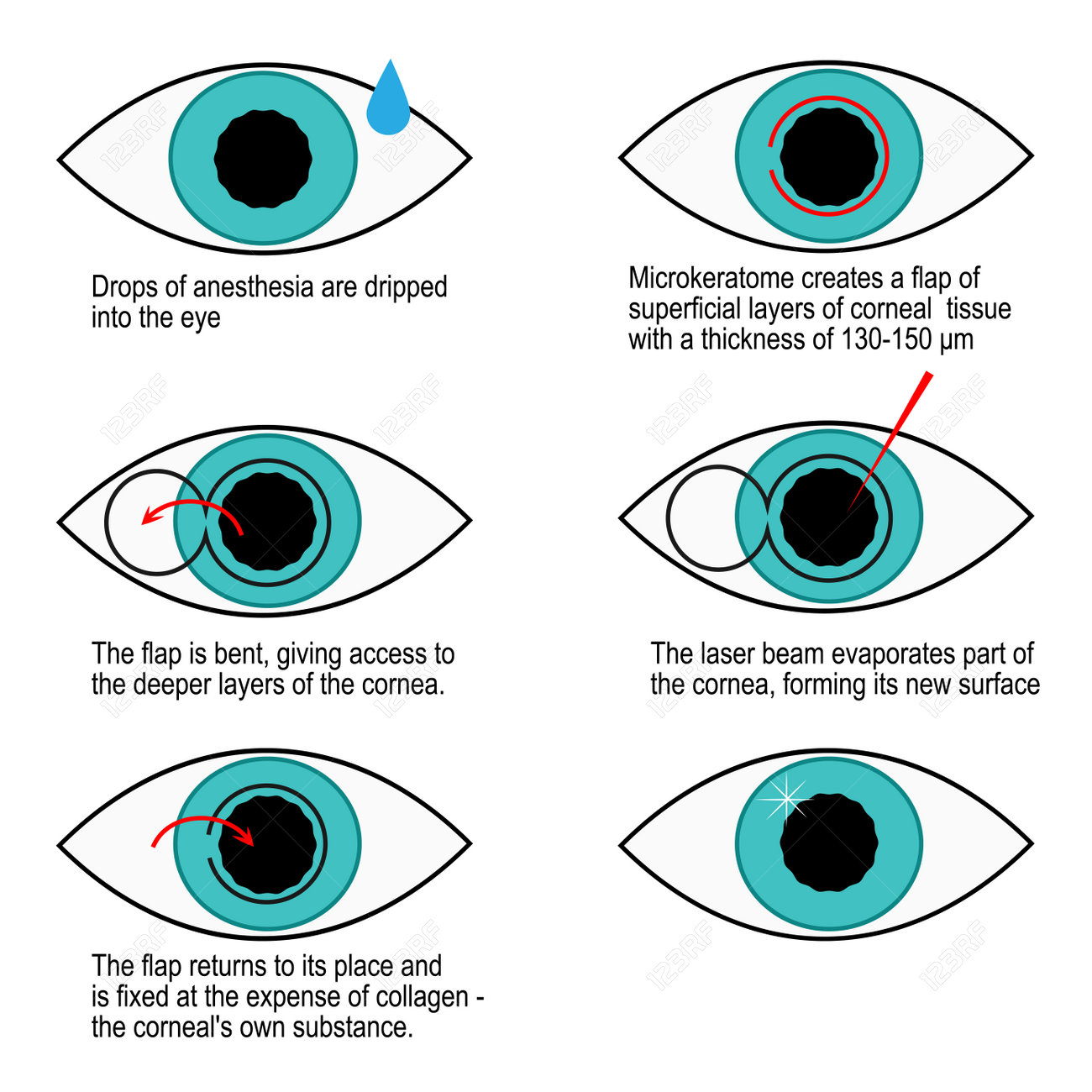
When taking into consideration laser vision correction procedures, LASIK attracts attention as one of one of the most prominent options. LASIK, which stands for Laser-Assisted In Situ Keratomileusis, is a commonly performed procedure to deal with refractive mistakes in the eye. Throughout LASIK surgery, a thin flap is produced on the cornea using a femtosecond laser. This flap is then lifted to permit a 2nd laser, an excimer laser, to improve the underlying corneal tissue. By changing the cornea's shape, LASIK can successfully remedy nearsightedness, farsightedness, and astigmatism.
Among the major advantages of LASIK is its quick recuperation time. https://www.health.com/condition/eye-health/savannah-guthrie-eye-surgery of clients experience improved vision almost promptly after the treatment, with very little discomfort throughout the healing procedure. Additionally, many people attain 20/20 vision or better after LASIK surgery. https://telegra.ph/Considering-Lasik-Eye-Surgical-Procedure-Discover-The-Benefits-And-Drawbacks-To-Make-An-Educated-Choice-Dont-Miss-This-Must-Read-06-10 to seek advice from a certified ophthalmologist to identify if LASIK is the right choice for your specific vision needs. Keep in mind to go over any kind of issues or questions you might have before undertaking the treatment.
SMILE
SMILE, short for Small Incision Lenticule Extraction, is a minimally invasive laser vision modification treatment. Throughout a SMILE treatment, a laser is used to develop a thin, call lens-shaped layer just below the surface of your cornea. This layer, called a lenticule, is after that gotten rid of through a tiny laceration, improving the cornea and remedying your vision.
One of the crucial advantages of SMILE is its very little disruption to the cornea's framework. Since just a little laceration is required to remove the lenticule, the cornea's overall strength and stability are better maintained contrasted to other treatments like LASIK. In addition, SMILE is understood for creating much less dry eye signs post-surgery, as the smaller sized laceration lead to less disruptions to the corneal nerves in charge of tear production.
Patients undertaking SMILE generally experience a fast healing, with lots of reporting enhanced vision within a few days. The procedure is well-suited for people with nearsightedness and astigmatism, providing an exact and effective solution for vision improvement.
Conclusion
Finally, when thinking about laser vision correction treatments like LASIK and SMILE, bear in mind that both alternatives offer remarkable results.
Whether you pick the flap development of LASIK or the lenticule development of SMILE, your vision can be transformed with marginal discomfort and downtime.
Welcome the clearness and flexibility these treatments give, and say goodbye to glasses and contacts completely with the power of accuracy and excellence in sight.